
Dental veneers vs composite bonding: which option makes more sense?
This is one of the most important comparisons in cosmetic dentistry because many patients do not come to a consultation already knowing exactly which treatment they want. What they usually know is what they would like to improve: a small tooth, a worn edge, a gap, an asymmetry, a color issue or a smile that simply does not feel as harmonious as it could. At that point, two options often enter the conversation very quickly: dental veneers and composite bonding. The real question should not be only which one costs less or which one can be done faster, but which option makes more sense for the type of case, the level of change being sought, the expected longevity and the kind of aesthetic result the patient truly wants.

In cosmetic dentistry, one of the most important decisions is not only improving the smile, but choosing the most suitable path to do so. Some patients need a localized, conservative and relatively quick solution. Others are looking for a more structured transformation, with stronger long-term stability and a more refined aesthetic result. That is why comparing dental veneers and composite bonding should not be reduced to a superficial fight between “the cheaper option” and “the premium one,” but instead understood as a much more intelligent clinical conversation.
Both bonding and veneers can be excellent options when properly indicated. The problem appears when one technique is pushed to solve a case that clearly calls for the other. If you are still building context around this treatment, it may also help to review our main page on dental veneers, understand how much dental veneers cost in Bogotá in 2026, learn whether dental veneers damage your teeth or explore how long veneers last and when they may need to be replaced.
The best option is not always the fastest one or the most talked about one, but the one that best fits the actual problem you want to solve
Many people compare dental veneers and composite bonding as if both treatments were interchangeable in any situation. But that is not always the case. Although both can improve the appearance of a smile, they do not work in exactly the same way, and they do not offer the same type of result, long-term stability or clinical indication.
There are cases in which bonding can be a very sensible solution, especially when the desired change is moderate, localized and compatible with a more conservative intervention. In other cases, veneers may make far more sense because they allow for a result that is more stable, more refined and better integrated over the medium and long term.
That is why, before asking which one is better, it is worth asking what exactly you want to improve, what level of result you expect and what type of long-term stability you want your smile to have. That kind of reflection becomes even more useful when it is connected with how veneers age over time and with how their cost should be interpreted according to the level of treatment involved.
Although both options can improve a smile, dental veneers and bonding do not work in exactly the same way
Dental veneers
Veneers are aesthetic restorations designed to change tooth shape, color, size or proportion through a more structured treatment plan and, in many cases, with a higher level of long-term visual stability.
Composite bonding
Bonding is a more direct technique that can be very useful for correcting certain localized details in a conservative and efficient way, with a different logic in terms of finish, maintenance and durability.
That does not mean one is automatically “better” than the other. It means each one plays a different role. Some smiles can be improved beautifully with bonding. Others need a more complete and more stable aesthetic architecture, where veneers become the more coherent option. That is precisely why this comparison naturally connects with questions such as whether veneers damage the natural tooth and how long they really last.
Composite bonding can be a very good option when the case is more localized, more conservative and does not require such a broad transformation
Small worn edges
It can work very well when the goal is to rebuild specific details without redesigning the entire smile.
Closing small gaps
In certain cases it can provide a conservative and efficient way to improve continuity and proportion.
Mild asymmetries
When differences between teeth are not too pronounced, bonding can help create better harmony without moving into a larger treatment.
Targeted changes
It often makes sense when the patient does not need a full transformation, but rather a specific and well-defined improvement.
In these kinds of situations, composite bonding can be a very valuable tool. Especially when the case allows for a direct, proportionate and carefully planned intervention. What matters is not asking this technique to ideally solve problems that actually require a much deeper aesthetic plan. In many situations, the difference becomes visible not only in the initial result, but also in how stable the outcome remains over time.
Veneers are often more suitable when the goal is a broader change, a more refined smile or greater stability over time

When a patient wants to improve several aspects at once — color, shape, size, proportion and overall harmony — veneers often provide a stronger framework for treatment. This is especially true when the goal is not simply to fix a small detail, but to build a smile that feels more coherent, more elegant and better integrated with the face.
Veneers may also make more sense when the patient highly values long-term aesthetic stability and wants a solution that is more likely to hold its visual quality over time, provided the case is well indicated and properly planned. In many patients, that approach moves closer to the logic of smile design than to a small isolated correction.
In other words, if the goal is not just to “improve things a bit,” but to clearly elevate the aesthetic quality of the smile, veneers may be the more coherent option. That is also why so many patients want to understand their cost in Bogotá, their expected longevity and their relationship with tooth preservation before making a decision.
One of the most important differences between veneers and bonding is often how they age and what level of maintenance they tend to require
From a practical point of view, one of the most relevant questions in this comparison is how long the treatment is expected to remain in good condition and how it behaves over time. It is not enough to ask whether something “holds up.” It also matters whether it maintains its aesthetics, texture, visual integration and functional stability over the years.
Bonding can be an excellent choice in the right case, but it often comes with a different maintenance logic. Veneers, when well indicated, usually sit within a higher expectation of long-term stability in certain contexts. That does not mean one technique is always superior to the other. It means the patient should clearly understand what kind of medium- and long-term commitment comes with each option.
If you want to go deeper into that part of the conversation, it may also help to review our article on how long dental veneers last and when they may need to be replaced. That article complements this comparison very well because it shows that the decision should not be based only on the immediate result, but also on how the treatment will evolve over time.
Both options can look good, but the level of aesthetic refinement that can be achieved is not always the same in every case
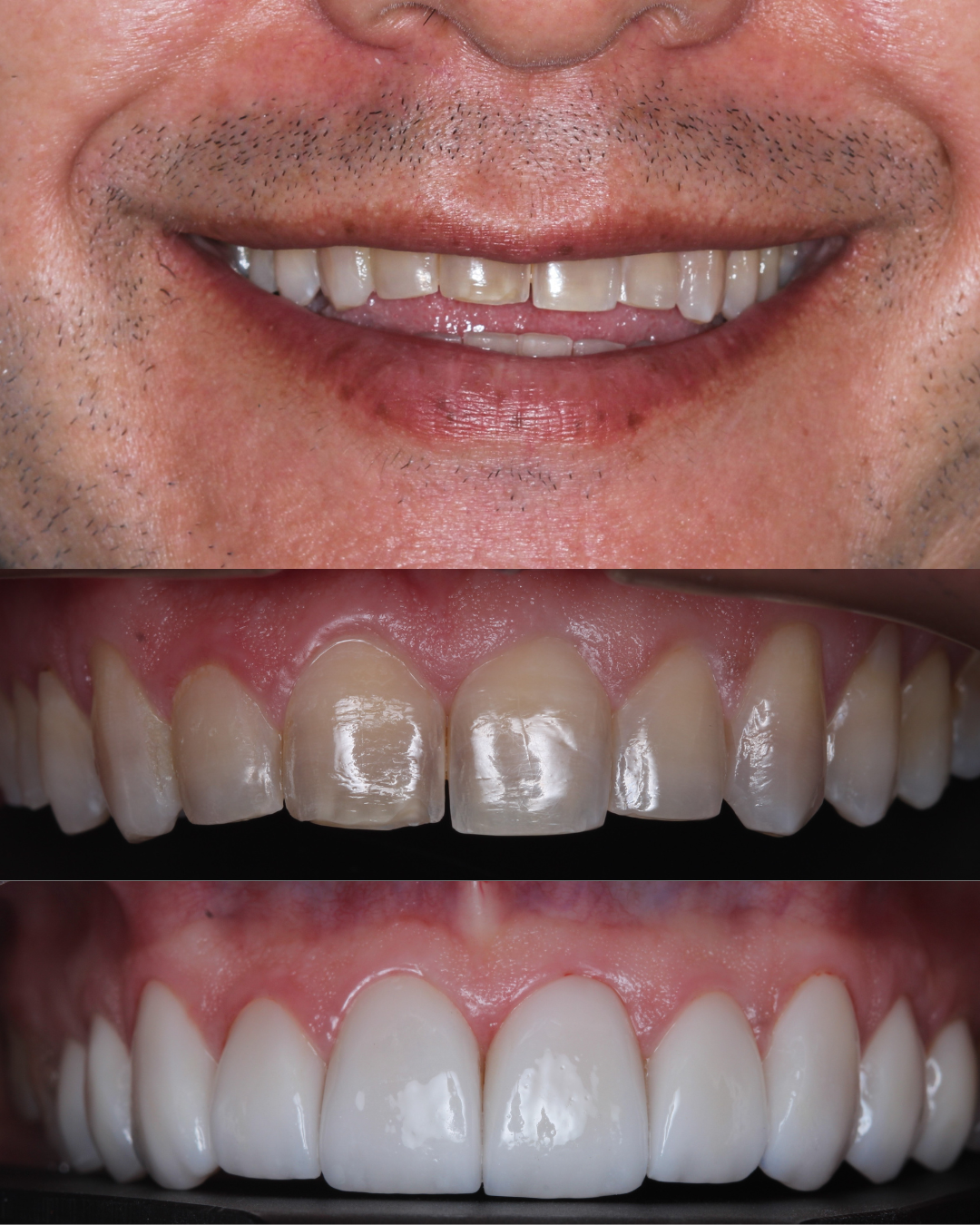
Some patients are simply looking for a discreet and functionally reasonable improvement. Others want a much more polished finish, a smile with a higher level of harmony and a more carefully refined visual integration. In those cases, the technique chosen has a major influence on the kind of refinement that can realistically be achieved.
Bonding can deliver beautiful results when it is well done and when the case truly allows for it. But when the goal is a higher-level smile, more uniform and better sustained over time, veneers often offer an important advantage. Not because of marketing, but because of the way they allow the result to be built.
That is why, when talking about naturalness, it is not enough to say that one option “looks good.” The real question is what level of harmony, precision and long-term aesthetic stability is being sought. At that point, the relationship between longevity, investment and the desired type of result becomes much clearer.
Bonding is often perceived as the more accessible option, but the decision should not be based only on the initial cost
It is true that in many cases composite bonding may feel like a more accessible entry point. That makes it very attractive for patients who want to make targeted improvements without moving immediately into a broader treatment.
But the decision should not stop there. It is also worth thinking about the level of change being sought, the type of maintenance the chosen technique may require and how the patient wants the smile to look not only now, but years from now.
Sometimes an option that appears more economical is absolutely the right fit because the case is simple and the expectations are realistic. In other situations, trying to solve with bonding what actually calls for veneers may lead to more retouching, more aesthetic limitations or a result that feels only partially resolved.
If you want to better understand the financial side of veneers, it may help to review the estimated cost of dental veneers in Bogotá. That perspective becomes even more useful when it is analyzed together with their expected longevity.
The comparison should also include how much the tooth needs to be altered and how compatible each option is with the natural structure of the case
One of the reasons many patients are drawn to bonding is that it is often associated with a more conservative level of intervention in the right context. And that is a real advantage when the case truly allows it. But the conversation should not stop at the idea that “less intervention is always better,” because it also matters whether the chosen treatment is actually the right answer to the aesthetic and functional needs of the patient.
In the same way, talking about veneers does not automatically mean assuming excessive damage to the tooth. When veneers are well indicated and carefully planned, they can fit perfectly within a serious conservative philosophy. In fact, this is one of the issues we explore more deeply in our article on whether dental veneers damage your teeth.
What matters is not choosing a technique only out of fear, but choosing the one that is truly compatible with the case, the anatomy and the intended aesthetic goal. That compatibility is what often separates a treatment that feels coherent from one that ends up falling short or being pushed beyond what it was meant to solve.
Sometimes the problem is not that bonding or veneers are “bad”, but that one of them is being used beyond the level of case it is actually meant to solve
That is where frustration usually appears. Not because the technique itself is wrong, but because it was expected to solve something that was never fully reasonable within that specific clinical and aesthetic context. In many of those situations, the issue is not the material itself, but the fact that the relationship between objective, investment, tooth preservation and long-term stability was not interpreted properly from the beginning.
The best way to choose between veneers and bonding is not to ask which sounds better, but which one solves your case better with the level of stability and aesthetics you expect

Some patients will prioritize a more localized and more conservative intervention. Others will want a more transformed, more polished smile with a higher aesthetic expectation. Some will be comfortable with periodic maintenance. Others will value a solution that offers greater long-term visual stability.
All of that is valid. What matters is that the decision should not be made as a simplistic comparison between two techniques, but as an honest reading of the case. The right question is not just “which one is better,” but which one is better for your specific smile, your bite, your aesthetic expectations and the way you want to experience the treatment.
In many cases, that conversation becomes much clearer when it is placed within the broader framework of smile design, rather than treated as an isolated comparison between two materials or techniques. And if you want to continue exploring after that, it makes perfect sense to connect this comparison with tooth preservation, longevity and treatment cost.
Dental veneers and composite bonding can both be excellent options, but not necessarily for the same kind of smile, objective or patient
Comparing veneers and bonding makes perfect sense because both techniques can improve the smile, but they should not be evaluated as if they always solved exactly the same problem. In some patients, composite bonding can be a very reasonable, conservative and sufficient solution. In others, veneers may offer a much better level of refinement, stability and aesthetic coherence with what the patient truly needs.
A smart decision is not born from choosing what is cheaper, faster or more famous. It comes from properly understanding the case, the scale of change being sought, the expected longevity, the desired level of naturalness and the kind of treatment that truly fits that smile.
If you want to keep exploring the topic, it may help to visit our main page on dental veneers, review how much they cost in Bogotá in 2026, understand whether they damage teeth and learn more about how long they last and when they may need replacement.
Would you like to know whether composite bonding or dental veneers make more sense in your case?
We can evaluate your smile, analyze the level of change you are looking for and guide you toward the option that best fits your anatomy, your bite, your aesthetic goals and the long-term stability you expect.
Explore more content about dental veneers, bonding, smile design and aesthetic planning in Bogotá
If you are comparing different ways to improve your smile, these pages can help you better understand price, longevity, tooth preservation and the overall logic behind a well-planned aesthetic treatment.
Dental veneers
Understand the general treatment approach and when veneers may make sense to improve smile shape, color and proportion.
Learn more PriceHow Much Do Dental Veneers Cost in Bogotá in 2026?
Explore estimated price ranges, cost factors and how to better understand the real value behind treatment.
Read article LongevityHow Long Do Dental Veneers Last and When Do They Need to Be Replaced?
Understand what influences veneer longevity and how they age from both an aesthetic and functional point of view.
Read article Tooth preservationDo Dental Veneers Damage Your Teeth?
Learn when veneers can be a conservative option and what factors help protect enamel and tooth structure.
Read article Cosmetic dentistrySmile design
Explore how a harmonious, natural-looking smile can be planned so it integrates beautifully with the face.
View more Complementary treatmentTeeth whitening
Understand when whitening can complement certain goals and when it does not replace changes in shape or proportion.
View more